

 Available in US
Content
The Fastest Way to Go Broke Is Bad Staking, Not Bad Picks
I have a friend who consistently identifies winning bets. His strike rate across three seasons has been north of 55% on match result markets, which is genuinely impressive. He is still in the red overall. The reason: he stakes £50 on bets he feels confident about and £10 on everything else, and his gut-feel confidence has no correlation with actual outcomes. His big-stake bets win at the same rate as his small-stake bets, but the losses on the big ones wipe out the profits on the small ones. He does not have a picking problem. He has a staking problem.
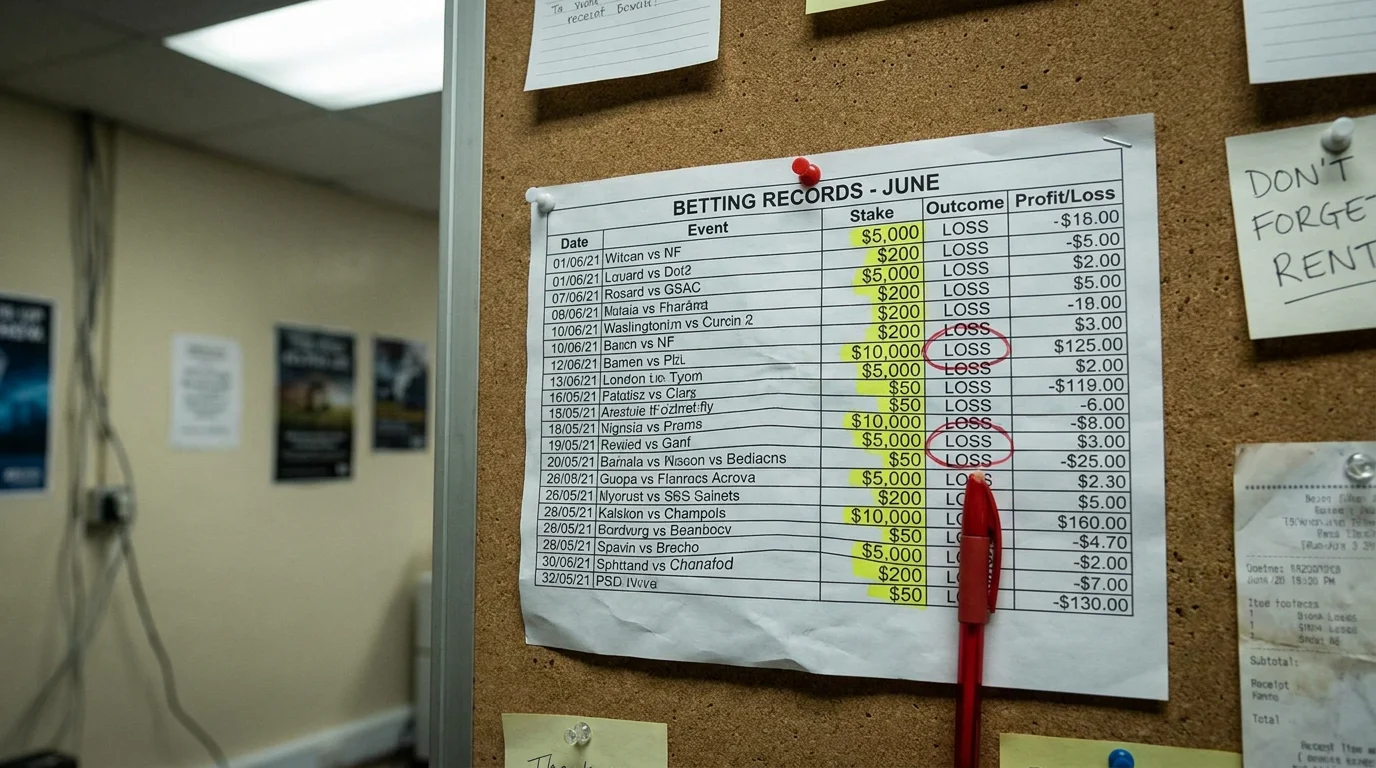
Bookmaker margin on football markets typically sits between 4% and 7%. That margin is a structural headwind that every bettor faces on every bet. To overcome it, you need an edge in selection — but to keep that edge from being destroyed by poor staking, you need a system that sizes your bets rationally rather than emotionally. This is bankroll management, and it is the least glamorous yet most important skill in football betting.
Flat Stakes, Percentage Stakes and Kelly: A Worked Comparison
There are three mainstream staking systems, and each suits a different type of bettor. I have used all three at various points and settled on a hybrid that takes the best elements from each.
Flat staking is the simplest. You bet the same amount on every selection regardless of odds, confidence, or perceived edge. If your bankroll is £1,000 and you stake 2% per bet, every bet is £20. The advantage is discipline: flat staking removes the temptation to overweight bets you “feel good about” and underweight those you are less sure about. The disadvantage is that it ignores useful information — a bet at 1.50 where you estimate 75% probability deserves a different stake from a bet at 4.00 where you estimate 30%, but flat staking treats them identically.

Percentage staking adjusts the stake to the current bankroll size. Instead of a fixed £20, you bet 2% of whatever your bankroll is at the time. If you win and the bankroll grows to £1,100, the next bet is £22. If you lose and it drops to £900, the next bet is £18. This system automatically scales down during losing runs and scales up during winning runs, which protects against ruin more effectively than flat staking. The drawback is that recovery from a drawdown is slower because you are betting smaller amounts when the bankroll is depleted.
The Kelly criterion is the most mathematically sophisticated approach. It calculates the optimal stake based on the perceived edge and the odds. The formula is: stake = (probability times odds minus 1) divided by (odds minus 1). If you estimate a 55% probability on a bet at odds of 2.00, Kelly says stake (0.55 times 2.00 minus 1) divided by (2.00 minus 1) = 10% of your bankroll. That sounds aggressive, and it is. Full Kelly staking produces the fastest theoretical bankroll growth but also the most severe drawdowns. Most serious bettors use fractional Kelly — typically one-quarter or one-half of the full Kelly stake — to reduce volatility while retaining the edge-proportional sizing.
Research into machine learning models for sports betting found that calibration-optimised models generated 69.86% higher average profit than accuracy-optimised ones. The link to staking is direct: if your probability estimates are well-calibrated, Kelly and fractional Kelly extract more value from each bet because the stake accurately reflects the size of your edge. If your probabilities are poorly calibrated — if your 55% predictions only land 48% of the time — Kelly will magnify your errors and accelerate your losses. Before using Kelly, you need a verified track record demonstrating that your probability estimates are genuinely calibrated over a sample of at least 200 bets.

My own approach: percentage staking as the baseline, with a fractional Kelly overlay for bets where I have strong confidence in my probability estimate. Most bets get a flat 1.5% of current bankroll. Bets where my estimated probability exceeds the implied probability by more than 8 percentage points get a quarter-Kelly stake, capped at 3% of bankroll. This hybrid keeps the discipline of percentage staking while allowing slightly larger positions on the highest-conviction selections.
Setting Stop-Loss Levels and Monthly Limits
No staking system protects you from extended drawdowns unless you build circuit breakers into the process. A drawdown — the peak-to-trough decline in your bankroll — is an inevitable part of betting, and planning for it before it happens is what separates sustainable bettors from ones who blow up their accounts.
I use a 20% monthly stop-loss. If my bankroll drops 20% from its value at the start of the month, I stop betting for the remainder of that month. No exceptions. This rule has triggered three times in nine years, and each time the forced break prevented me from chasing losses into a deeper hole. The stop-loss is not an admission of failure — it is an acknowledgement that a 20% drawdown in a single month is statistically unusual enough to warrant a review of whether something has changed in the market or in my analysis.
Monthly profit targets are equally important, though less discussed. I set a soft target of 10% bankroll growth per month. If I hit it early, I reduce my remaining activity for the month rather than trying to push the number higher. The rationale is simple: the bets available in the final week of a good month are no better than the bets available in the first week. The temptation to keep pressing when you are ahead is a form of overconfidence bias, and the stop-profit prevents it from eroding the gains already banked.

Weekly reviews complete the framework. Every Sunday evening I calculate my current bankroll, compare it to the start-of-week figure, and review the week’s bets for process quality rather than outcome quality. A winning week with sloppy analysis is a warning sign. A losing week with sound analysis is a reason to stay the course. The outcome tells you about variance; the process tells you about edge. For a broader framework on building your betting approach around these principles, the football betting strategy guide covers record-keeping and seasonal planning alongside staking.

What is the difference between flat staking and percentage staking in practice?
Flat staking bets the same pound amount on every selection regardless of bankroll changes. Percentage staking bets a fixed percentage of your current bankroll, so the pound amount rises when you are winning and falls when you are losing. Percentage staking provides better ruin protection during losing streaks because the stakes shrink automatically, but it also means recovery from drawdowns is slower. For most recreational bettors, percentage staking at 1-2% per bet is the better default.
How big a bankroll do I need to start football betting seriously?
A minimum of 50 units is a reasonable starting point, where one unit is your standard bet size. If you plan to stake £10 per bet, you need at least £500 set aside exclusively for betting. Below 50 units, a normal losing streak of 8-10 bets can wipe out a significant portion of your funds and force you into either chasing losses or abandoning the approach before it has had time to prove itself. Ideally, start with 100 units for a comfortable buffer.
