
 Available in US
Content
Same-Game Multis: Why Bookmakers Love Them
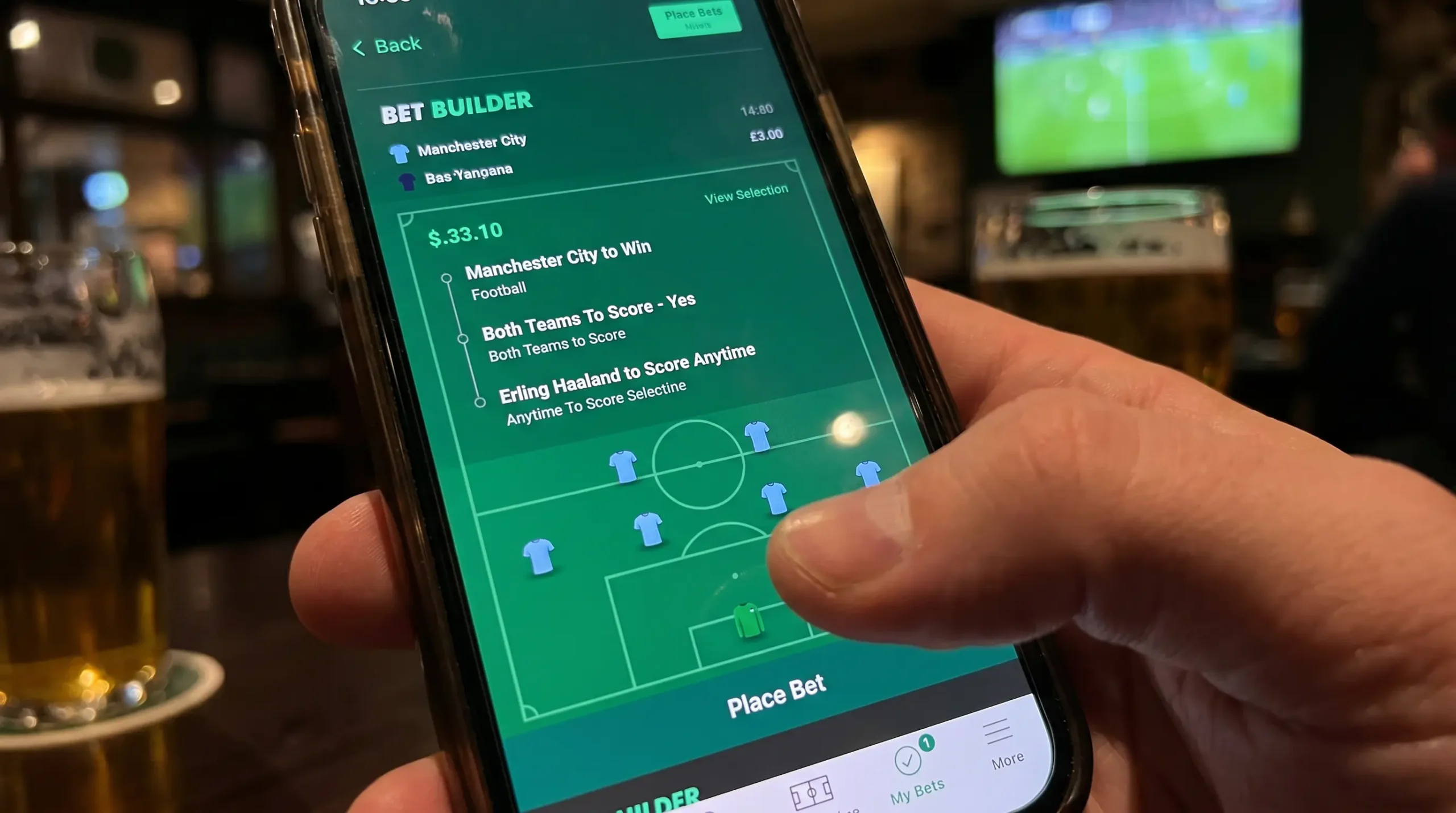
Every major UK bookmaker now promotes bet builders on their homepage. There is a reason for that, and it is not generosity. With 290 million online bets placed monthly in the UK, same-game multis have become one of the fastest-growing product categories in the industry — and one of the most profitable for operators.
The appeal for punters is obvious: you combine multiple selections within a single match to build bigger odds. Match result plus a goalscorer plus over 1.5 goals plus a card — suddenly your 1.80 single has become a 12/1 four-leg builder. It feels creative, personal, and exciting. What most punters do not realise is that the bookmaker’s margin on a bet builder is significantly higher than on any of those legs priced individually. Each leg carries its own margin, and those margins compound when combined.

Andrew Rhodes, formerly the Chief Executive of the Gambling Commission, noted that the next five years will bring more consequential changes to gambling regulation than the previous five. Bet builders are likely to attract regulatory scrutiny precisely because of how they concentrate margin into a single product. Until that happens, the informed bettor needs to understand how the maths works so they can use bet builders strategically rather than recreationally.
Checking Leg Correlation Before Building Your Bet
The critical concept most bet builder guides skip is correlation. Two events are correlated when the occurrence of one changes the probability of the other. In a same-game multi, correlated legs are everywhere, and the bookmaker does not give you a fair price for that correlation.
Take the most common example: backing a team to win and backing over 2.5 goals. These are positively correlated because teams that win tend to score more goals, which pushes the total above 2.5 more often than the baseline rate. If the independent probability of a home win is 50% and over 2.5 goals is 55%, a naive multiplication gives 27.5%. But the correlated probability is higher — perhaps 32-35% — because the two outcomes overlap heavily. When the bookmaker prices your bet builder, they use their own correlation model, but they shade the odds in their favour. You get a price that implies 24-26%, not the 32-35% that fair pricing would suggest. That gap is pure margin.

Negative correlation works the other way and can sometimes help you. Backing the underdog to win and under 2.5 goals are negatively correlated in most match profiles, because underdog wins in low-scoring games are relatively rare events. The bookmaker’s pricing may underweight this negative correlation, giving you a combined price that more accurately reflects the true probability. I have found that contrarian bet builders — combinations the casual market rarely backs — sometimes carry tighter effective margins than popular ones.

My process for checking correlation before placing a bet builder: I estimate the probability of each leg independently, multiply them together, and then ask whether the resulting combined probability makes sense given the match context. If the independent calculation gives 8% but I think the correlated reality is closer to 12%, the bookmaker’s price needs to imply 11% or lower for me to consider the bet. If the bookmaker is already pricing at 10%, I am getting a raw deal despite the legs individually looking reasonable.
Football generates £1.1 billion in GGY from UK bettors each year. A growing share of that flows through bet builders, and the bettors who profit are the ones who treat correlation as the first analytical step, not an afterthought.
Shots, Corners and Cards: Using Player Stats to Choose Legs
Beyond match-level legs like result and totals, bet builders allow you to add player props: shots on target, tackles, cards, corners won. These are where analytical bettors can find genuine edges, because the data is publicly available but most punters do not bother to check it.
Shots on target is the player prop I use most frequently. A Premier League forward averaging 1.8 shots on target per 90 against a defence that concedes 5.5 shots on target per game is in a strong position to hit the over 0.5 or over 1.5 shots on target line. The bookmaker prices these lines based on season averages, but matchup-specific adjustments — especially for midweek fixtures or newly promoted opposition — often lag behind the data.

Corners are trickier because they depend on team-level dynamics rather than individual performance, but they can be a useful bet builder leg when the correlation is favourable. A dominant home side facing a deep-sitting away team will naturally accumulate corners, and if you are already backing the home win, adding over 5.5 team corners is a positively correlated leg where the combined probability is higher than naive multiplication suggests.
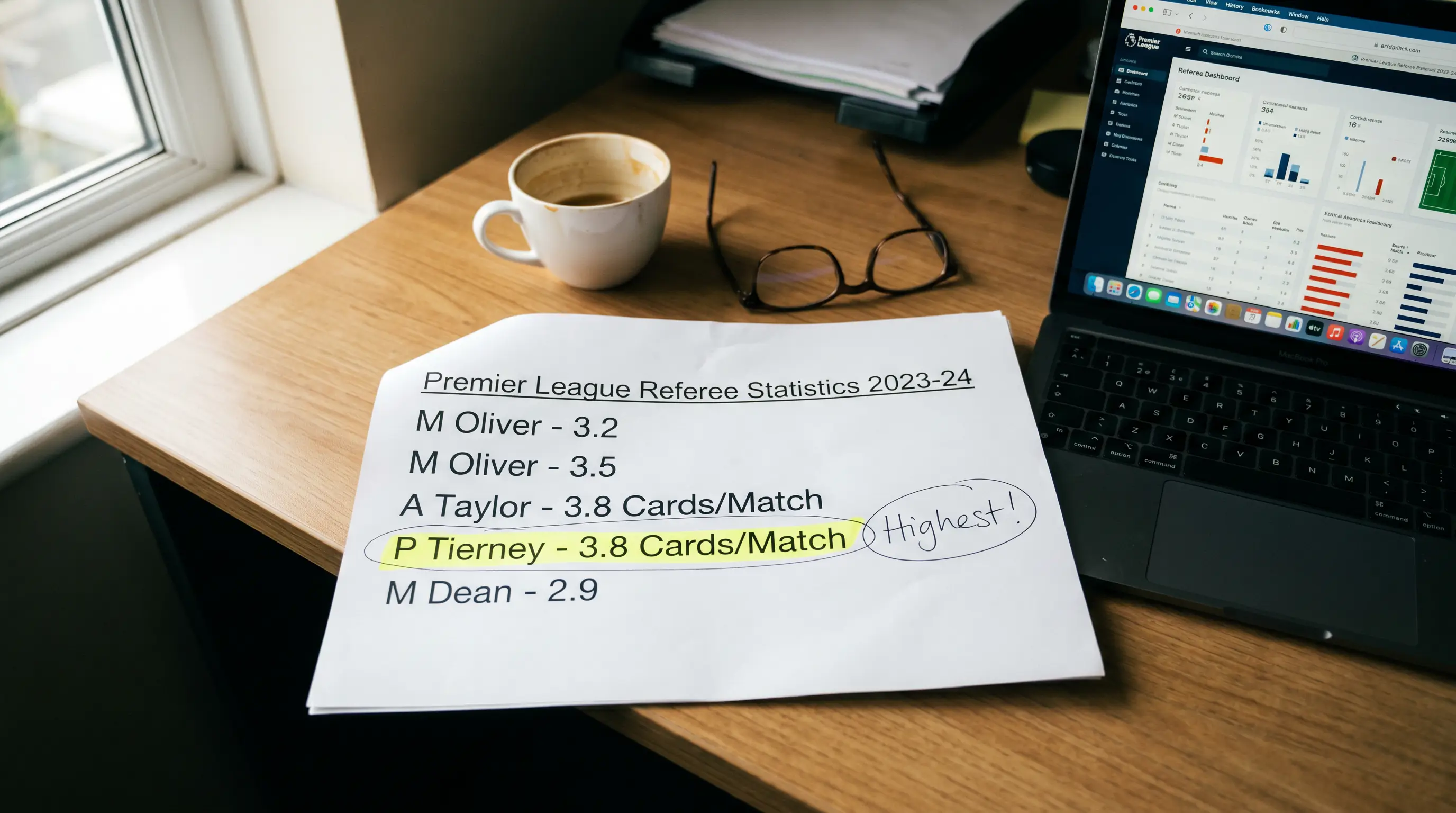
Cards require a different data source: referee profiling. Some referees average 4.5 cards per match, others average 2.5. That difference is enormous in the booking points market. I check the referee appointment before adding any card-related leg to a bet builder, and I only include it when the referee’s per-match average supports the line. A “player to be carded” leg on a midfielder who averages 2.1 fouls per 90 is a reasonable bet when the referee dishes out cards freely; the same leg with a lenient referee is a waste of a selection.
The overarching principle: every leg in a bet builder should pass its own standalone analysis before being added to the combination. If you would not bet it as a single at the individual price, it does not belong in your builder. The bet builder is a tool for combining independently justified selections, not for padding the odds with hope. For a deeper look at how accumulator mechanics apply to multi-leg bets, the accumulator tips guide covers the mathematical underpinnings in detail.

How many legs should a bet builder have?
Two to three legs is the range where you can maintain analytical rigour without the margin compounding to punitive levels. Each additional leg adds both margin and variance. Four legs can work if the correlation structure is favourable, but beyond that you are stacking probabilities that become very difficult to overcome. Bookmakers promote five-leg and six-leg builders because they are enormously profitable for the operator.
Do bookmakers inflate margins on bet builders?
Yes. The margin on a bet builder is almost always higher than the sum of margins on the individual legs priced separately. Bookmakers use proprietary correlation models that tend to shade in their favour, particularly on popular combinations like team win plus goalscorer. The effective overround on a three-leg bet builder can easily exceed 15-20%, compared with 4-7% on a standard match result market. Understanding this hidden cost is essential before committing to any same-game multi.
