
 Available in US
Why Most Football Betting Tips Miss the Mark
I spent my first two years betting on football the way most people do — scrolling through tip sheets, tailing strangers on Twitter, and wondering why my bankroll kept shrinking despite following "expert" picks. It was only when I stopped chasing tips and started interrogating the numbers behind them that anything changed. Nine years on, I still remember the moment the penny dropped: the problem was never finding predictions. The problem was that predictions, on their own, are worthless without a framework to evaluate them.
That realisation sits at the heart of everything you will read here. This is not a page of today's picks. There are thousands of those already, and the overwhelming majority lose money over any meaningful timeframe. Football betting generates roughly 1.3 billion pounds in gross gambling yield for UK bookmakers every year — that is real money flowing from punters' accounts to operators' balance sheets. If free tips reliably reversed that flow, bookmakers would not be posting record revenues.
Around 5.8% of the UK adult population bets on football, making it comfortably the most popular sport for wagering. Yet almost none of the sites serving those millions of punters explain how odds are constructed, where bookmaker margin hides, or why bankroll discipline matters more than any single selection. This guide exists to fill that gap.
What I have built over nine seasons of value betting and statistical modelling is a process — not a crystal ball. The approach leans on publicly available data, a clear understanding of how bookmakers price markets, and a set of rules that keep emotion out of staking decisions. Some of what follows will feel uncomfortable, especially the sections on realistic profit expectations and the maths that tilts every market in the bookmaker's favour. Good. Discomfort is where learning starts.
Whether you are placing your first football bet or refining a method that already has a few thousand selections behind it, the structure here moves from foundations to specifics: market context, odds mechanics, the value equation, market selection, bankroll management, data tools, regulation, and responsible gambling. Each section links to a deeper standalone guide if you want to go further. Treat this as the map; the cluster articles are the street-level detail.
The Five Numbers That Shape Every Football Bet You Place
- UK bookmakers retain 1.3 billion pounds annually from football betting alone — the overround on every market is the mechanism that makes this possible.
- Bookmaker margin on a standard match result market runs 4-7%; Asian handicap is tighter at 2-4%. Knowing the margin tells you how big your edge needs to be.
- Value betting — staking only when your probability estimate exceeds the implied odds — is the only approach supported by academic evidence, with calibrated models returning 10-15% ROI across multiple studies.
- Staking discipline matters more than selection skill. Flat stakes of 1-2% per bet protect your bankroll through the losing runs that every method produces.
- Regulation is tightening: Remote Gaming Duty has doubled to 40%, promotions will shrink, and affordability checks are expanding. The era of easy free bets is ending.
UK Football Betting in Numbers: Market Size and Who Bets
A few years ago, a friend who works outside the gambling industry asked me how big football betting actually is in Britain. I pulled up the Gambling Commission's latest annual report and watched his face change. The numbers are staggering — and understanding them is the first step toward understanding why bookmakers are so good at what they do.
The UK online gambling market reached 9.0 billion dollars in 2025, with projections pointing toward 13.2 billion dollars by 2034. Within that, sports betting accounts for 57.1% of total online gambling revenue. Football sits at the top of the pile: remote betting alone brought in 2.6 billion pounds in gross gambling yield during the financial year ending March 2025, and football's share of that was 1.3 billion pounds — more than horse racing, tennis, and every other sport combined.
Gross gambling yield — GGY — is the amount bookmakers retain after paying out winners. It is the industry's standard measure of revenue and the clearest indicator of the collective gap between what punters stake and what they get back.
The Gambling Commission's chief executive, Andrew Rhodes, noted that gross gambling yield has grown to its highest ever level, though he added the caveat that adjusting for inflation shows the relative value of gambling has fallen in recent years. That nuance matters. The industry is enormous in absolute terms, yet it is not the runaway growth story some operators would have you believe.
Who is doing all this betting? Roughly 47% of UK adults participated in some form of gambling in a recent four-week measurement window, a figure that has stayed remarkably stable across successive waves of the Gambling Commission's surveys. For online sports betting specifically, the participation rate sits at around 10% of the population — 15% of men and 4% of women. Live football is the single most popular live-betting product: 5% of all adults, and 9% of men, have placed an in-play football bet.
The demographic skew is worth noting. Around 95% of online gambling happens from home, and 32% of mobile bettors are aged 18 to 24. The 25-to-34 age bracket is the most active overall. These are not fringe numbers. Football betting is mainstream, mobile-first, and heavily concentrated among younger men — which makes it all the more important that the information available to them goes beyond "back the home team at 2.10."

Scale in context: UK punters place approximately 290 million online bets on real events every month. If even a small fraction of those bettors improved their process by understanding margin, value, and staking, the aggregate shift in outcomes would be significant. That is the ambition of this guide — not to promise profits, but to raise the baseline of understanding.
With the market's scale and structure in mind, the next question becomes mechanical: how do bookmakers actually set the prices you see on your screen?
How Bookmakers Set Football Odds
Early in my career I assumed bookmakers employed rooms full of football experts who watched every match and then scribbled numbers on a whiteboard. The reality is more interesting — and more mechanical. Modern odds compilation starts with statistical models, not opinions.
A bookmaker's trading team begins with a probability model for each match outcome. For a Premier League fixture, the model ingests historical results, current form, expected goals data, squad availability, home advantage coefficients, and dozens of other variables. The output is a set of "true" probabilities — say, 45% for a home win, 28% for a draw, and 27% for an away win. Those probabilities sum to 100%, which would produce perfectly fair odds. But bookmakers are not in the business of offering fair odds.
Overround — the amount by which the implied probabilities of all outcomes in a market exceed 100%. It represents the bookmaker's built-in margin and is sometimes called the "vig" or "juice." A typical three-way football market carries an overround of 4 to 7%.
To build in their margin, the bookmaker inflates each probability before converting to odds. Instead of a clean 100% total, the market might sum to 105% or 106%. That extra 5 or 6 percentage points is the overround — and it is, effectively, the tax you pay on every bet. On major events like a Champions League final, competition between operators can squeeze the overround down to roughly 3%, but on a League One midweek fixture it can creep above 8%.
Seeing the margin in action
Suppose a bookmaker offers decimal odds of 2.20 for a home win, 3.40 for a draw, and 3.50 for an away win.
Step 1: Convert each price to implied probability. Home: 1 / 2.20 = 45.45%. Draw: 1 / 3.40 = 29.41%. Away: 1 / 3.50 = 28.57%.
Step 2: Sum the implied probabilities. 45.45 + 29.41 + 28.57 = 103.43%.
Step 3: The overround is 103.43% - 100% = 3.43%. This is a relatively tight market. In practice, anything below 4% is competitive.

Once the opening prices are live, a second force takes over: money. As bets land, the bookmaker adjusts odds to manage liability. Heavy backing of the home side will shorten that price and push out the draw and away prices. Team news — a key striker ruled out, a goalkeeper returning from injury — triggers rapid repricing. By kick-off, the odds you see are a blend of the original model output, market money, and late information.
This is why understanding how football odds work is not optional. If you do not know what the price represents, you cannot judge whether it is too high or too low. And that judgement is the entire game.
One more thing worth internalising: bookmakers do not need to predict results correctly. They need to set prices that attract balanced action and guarantee margin regardless of the outcome. The overround does that job quietly, on every market, every day. Your task as a punter is to find the spots where the price overstates the real probability of an event not happening — in other words, to find value.
The overround guarantees the bookmaker a slice of every market. The question for you is whether any individual price within that market is generous enough to overcome the cut. That is where the value equation comes in.
The Value Equation: Implied Probability vs True Probability
There was a Saturday afternoon, maybe four years into my betting life, when I backed a League One home side at 1.80 because I "fancied them." They won. I felt clever. Then I ran the numbers over the next hundred bets placed on the same logic and realised I was down 11% on turnover. The individual win had masked a structural problem: I had no concept of value.
Value, in betting, has a precise meaning. A bet has value when the probability you assign to an outcome is higher than the probability implied by the bookmaker's odds. Not higher than you "feel" — higher than your analysis, your model, your data suggest. The formula is simple:
The value bet formula
Value = (Your estimated probability x Decimal odds) - 1
If the result is greater than zero, the bet has positive expected value (+EV).
Example: You assess a home win at 55% probability. The bookmaker offers 2.10.
Value = (0.55 x 2.10) - 1 = 1.155 - 1 = +0.155
A positive figure — this is a value bet. For every pound staked, you expect a theoretical return of 15.5p over the long run.
Now change the odds to 1.70: Value = (0.55 x 1.70) - 1 = 0.935 - 1 = -0.065. Negative. Not a value bet, even though you think the home side will win.

The distinction between "I think they will win" and "this price is too big" is the single most important mental shift in betting. A team can be overwhelmingly likely to win and still be a terrible bet if the odds are too short. Conversely, a side you expect to lose can be a value bet if the price is fat enough.
Implied probability in practice: Decimal odds of 3.00 imply a 33.3% chance. If your analysis says the true probability is 38%, you have a 4.7 percentage-point edge before margin. That edge is your entire profit engine.
Academic research supports this. A study published in SAGE Journals, examining an expected-goals model applied to eleven Bundesliga seasons, found a return on investment of roughly 10% at average market odds and around 15% when using the best available prices. The profit came predominantly from backing home wins — a market where the model's probability estimates diverged most from bookmaker pricing. A separate systematic review of machine learning in sports betting showed that models optimised for calibration — how well predicted probabilities match actual outcomes — generated 69.86% higher average profit than models optimised purely for prediction accuracy. The takeaway is sharp: getting the probabilities right matters more than getting the winner right.
None of this means value betting is easy. You need a reliable method for estimating true probabilities, and that method must be better than what the bookmaker already has. For a deeper dive into the mechanics — overround calculation, step-by-step identification, and the markets where value appears most often — I have written a dedicated guide to value betting in football.
Knowing how to spot value is one thing. Knowing which market to apply it to is another — and not all football betting markets are created equal.
Football Betting Markets: Which Ones Suit Your Style
When I first started logging my bets properly, I noticed something odd. My strike rate on match result bets was decent, but my returns on over/under goals were better — even though I won those bets less often. The difference was margin. The bookmaker was taking a smaller cut on some markets than others, and I had been ignoring that completely.
Not every market rewards the same type of analysis. Some suit punters who prefer high-frequency, lower-odds selections. Others suit those who are comfortable with long losing runs in exchange for larger payouts when they hit. The table below is a starting framework, not a definitive ranking — your edge will depend on where your analysis is strongest.
| Market | Typical Odds Range | Bookmaker Margin | Strike Rate Feel | Best Suited To |
|---|---|---|---|---|
| Match Result (1X2) | 1.30 - 5.00+ | 4 - 6% | Moderate | Punters who analyse team-level form and xG |
| Both Teams to Score (BTTS) | 1.65 - 2.10 | 5 - 7% | Higher | Those comfortable with goals-based data |
| Over/Under 2.5 Goals | 1.70 - 2.20 | 5 - 7% | Moderate-high | Statistical modellers using xG and pace data |
| Asian Handicap | 1.85 - 2.05 | 2 - 4% | Near 50/50 | Sharp bettors seeking low margin and no draw |
| Correct Score | 6.00 - 30.00+ | 10 - 20%+ | Very low | Punters with Poisson models and high variance tolerance |
| Anytime Goalscorer | 2.00 - 5.00 | 8 - 15% | Low-moderate | Those tracking shots, xG per 90, and penalty duties |
| Bet Builder / SGM | 3.00 - 20.00+ | 15 - 25%+ | Low | Punters who check leg correlation carefully |
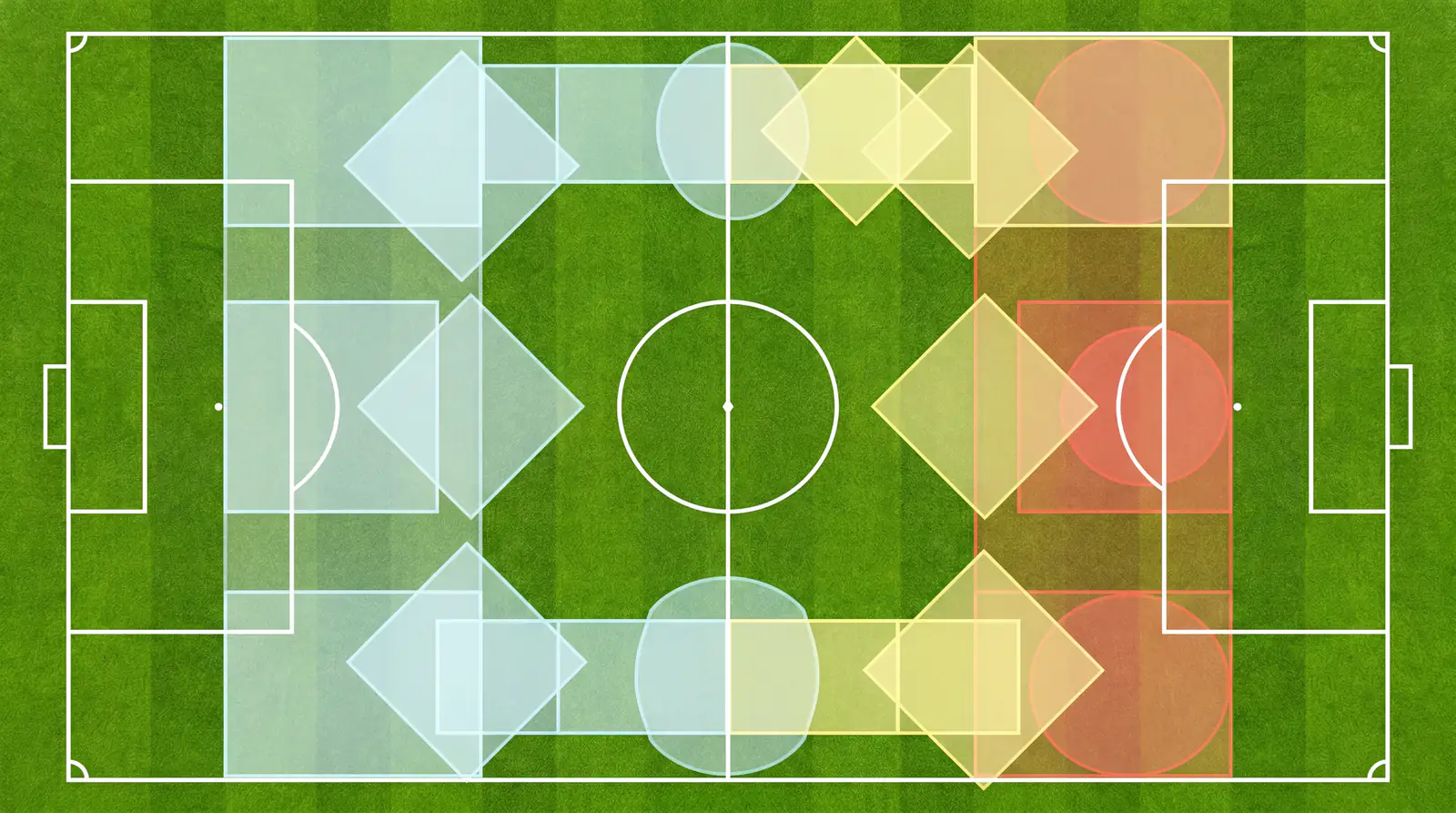
Asian Handicap — a market that eliminates the draw by applying a goal handicap to one side. Half-goal lines (e.g., -0.5, -1.5) guarantee a result; quarter-goal lines split your stake across two handicaps. Margins are typically the tightest of any football market.
A few patterns are worth calling out. Asian handicap markets consistently carry the lowest margins — often 2 to 4% — which is why they attract professional bettors. Correct score and bet builders sit at the opposite end, with margins that can exceed 20%. Those markets are designed to be entertaining, not beatable at scale. That does not mean you should never touch them, but your staking should reflect the variance.
Match result remains the bread and butter of UK football betting, and it is where most publicly available models (including xG-based ones) are tested. Over/under goals and BTTS are natural companions because the same underlying data — expected goals, shots on target, defensive records — feeds into both. If you are building a football accumulator, understanding how these markets interact and correlate is essential to avoiding hidden margin traps.
My advice after nine years: start with one or two markets, learn their rhythm, and only branch out when your records tell you it is time. Spreading bets across seven markets feels diversified. Usually it just means you are mediocre at all of them.
Picking the right market is half the equation. The other half — the one most tipping sites skip entirely — is how much to stake on each selection.
Bankroll Management Principles Every Punter Needs
Here is a confession: the worst month I ever had was not caused by bad picks. My selections that month actually hit at a shade over 40%, which was fine for the odds range I was betting. The damage came from staking. I had doubled my usual unit size after a strong run, convinced I was "seeing the game clearly." When the inevitable cold streak arrived, it wiped out six weeks of profit in nine days. That month taught me what no tipster ever mentioned: staking discipline is the structural foundation; everything else is decoration.
The principle is straightforward. Set aside a fixed sum — your bankroll — that is entirely separate from your living expenses. Divide it into units. Each bet risks a fixed number of units, regardless of how confident you feel. The most common approaches are flat staking (the same absolute amount on every bet), percentage staking (a fixed percentage of your current bankroll, which adjusts as the bankroll grows or shrinks), and the Kelly criterion (a formula that sizes each bet according to your perceived edge and the odds offered).
Do
- Define your bankroll before placing a single bet — money you can afford to lose entirely without affecting your life.
- Use 1-2% of your bankroll per bet if you are starting out. Even experienced punters rarely exceed 3%.
- Track every bet in a spreadsheet or app: date, match, market, odds, stake, result. No exceptions.
- Set a monthly loss limit and stop betting if you hit it. Revisit your approach before resuming.
- Review results over a minimum of 200 bets before drawing conclusions about your method.
Don't
- Increase stakes after a winning run to "press your advantage." Variance does not care about your recent form.
- Chase losses by doubling up on the evening's matches after a bad afternoon. This is the fastest route to zero.
- Treat accumulator stakes as "fun money" outside your bankroll. Every bet counts.
- Assume that a tipster's confidence rating justifies larger stakes. Your staking plan should be independent of external opinions.
- Ignore losing months. If your method produces three consecutive losing months, something needs to change — the method, the markets, or both.

I use a modified flat-staking system: 1.5% of my starting seasonal bankroll on standard selections, 1% on higher-variance markets like correct score, and nothing above 2% regardless of circumstances. It is not glamorous. It is not what sells on social media. But it has kept me solvent through every cold streak over nine seasons, and that counts for more than any individual winner.
Pre-bet bankroll checklist
- Is this stake within my unit range (1-2% of current bankroll)?
- Have I already placed my maximum number of bets for the day?
- Am I betting to recover a previous loss? If yes, stop.
- Does this bet come from my pre-match analysis, or is it an impulse reaction to something I just saw?
- If this bet loses, will I still be comfortable with my remaining bankroll?
For a full breakdown of how flat staking, percentage staking, and the Kelly criterion compare in practice — including worked examples with real-world variance scenarios — the football betting strategy guide goes deeper than I can here.
Sound staking protects your bankroll. But what feeds the selections that your staking system sizes? Data — and knowing which data actually matters.
Using xG, Form and Stats to Sharpen Your Picks
I once spent an entire Saturday afternoon arguing with a mate about whether a newly promoted side was "in great form." They had won three of their last five. Looked solid on paper. Then I pulled up their expected goals numbers and the picture flipped: they had been outshot in four of those five matches, scored from low-probability chances, and their goalkeeper was performing two standard deviations above his season average. Within a month, their results collapsed. The underlying data had been screaming warning signs; the league table was just slow to catch up.
Expected goals (xG) is a metric that assigns a probability of scoring to every shot based on factors like distance, angle, body part, and assist type. A team's xG over a run of matches reveals whether their results are sustainable or inflated by luck. When xG and actual goals diverge sharply, regression — in either direction — is likely.

For betting purposes, xG is not a magic number. It is one layer in a multi-layer assessment. I use five: recent results (the headline), xG and xA underlying performance (the correction), shot volume and quality (the engine), schedule density and squad rotation (the context), and head-to-head records (the footnote, not the headline). Each layer can confirm or contradict the others, and the bets I am most confident in are the ones where three or more layers align.
The academic evidence reinforces this layered approach. The Bundesliga xG study I mentioned earlier produced its returns primarily from matches where the model's probability differed meaningfully from the market price — not from blindly following xG output. Meanwhile, research into machine learning models for sports betting found that calibration quality — how well a model's probability estimates match reality — drove profitability far more than raw prediction accuracy. A model that says "home win: 52%" and is right 52% of the time beats a model that says "home win: 80%" and is right 65% of the time. Calibration is the game.
The term "football betting" generates 19,000 monthly searches in the UK alone — more than any other sport. Despite that volume, almost none of the top-ranking pages explain how to use xG, form decomposition, or shot data to inform selections. The information gap is enormous.

Free xG data is more accessible than ever. Several publicly available platforms provide match-level and team-level expected goals for the Premier League, Championship, and major European leagues. The key is not just looking at the numbers but comparing them to the market. If a mid-table side's xG suggests they should be winning 48% of their home matches but the bookmaker is pricing them at 40% implied probability, you have a candidate for further analysis. If the xG agrees with the market price, there is no edge — move on.
Form analysis goes beyond "WWDLW." I look at performance against the spread of opponent quality, home-versus-away splits, minutes per goal conceded from open play versus set pieces, and whether a squad is in a congested run of fixtures that might prompt rotation. None of this takes more than 15 minutes per match once you have a template. The discipline is not in the complexity of the analysis — it is in doing it consistently, match after match, week after week.
Data sharpens your picks, but the landscape those picks exist in is shifting. UK gambling regulation is changing faster than at any point in the last two decades — and the changes will affect what you can bet, how much, and at what price.
UK Gambling Regulation: What's Changing and Why It Matters
Most tipping sites treat regulation the way they treat terms and conditions: shove a disclaimer at the bottom and move on. I think that is a mistake, because the regulatory changes landing in 2026 and 2027 will directly affect the odds you are offered, the promotions available to you, and potentially how much you are allowed to stake.
The former chief executive of the Gambling Commission put it bluntly: the next five years will be more consequential for gambling regulation than any period in recent memory, bringing uncharted challenges for boards, investors, and leaders across the sector.
The headline change is fiscal. Remote Gaming Duty — the tax operators pay on online casino and gaming revenue — has been increased from 21% to 40%, effective April 2026. A new General Betting Duty rate of 25% for remote betting follows in April 2027. The Office for Budget Responsibility expects these changes to raise an additional 1.1 billion pounds annually by the end of the decade. The Chancellor, Rachel Reeves, justified the move by citing evidence that online gaming and online betting result in more serious harms than in-person betting.
For punters, the ripple effects are practical. Operators facing a near-doubling of their tax burden will look to recover margin somewhere. That "somewhere" is likely to be a combination of tighter odds (wider overrounds), fewer and less generous promotions, and stricter account management for winning bettors. One major operator has already estimated the new tax regime will cost them roughly 200 million pounds in additional annual expenses. Those costs do not evaporate — they get passed along.
Beyond taxation, the Gambling Act reform programme continues to introduce affordability checks, enhanced due diligence on high-spending customers, and tighter rules around direct marketing. The government has also committed 26 million pounds over three years for the Gambling Commission to pursue illegal gambling websites — a signal that the regulatory net is widening, not loosening.
Then there is the sponsorship shift. Eleven Premier League clubs carried gambling sponsors on the front of their shirts in the 2025/26 season. A ban on front-of-shirt gambling logos takes effect from the 2026/27 campaign. The financial impact is significant: gambling brands accounted for 129.6 million dollars of the Premier League's 525.4 million dollar front-of-shirt sponsorship market. Clubs replacing those deals with non-gambling brands face an estimated 38% drop in that specific revenue stream.
Why should a bettor care about shirt sponsorship? Because the money operators spend on sponsorship is part of their customer-acquisition budget. As that channel closes, promotional spend may shift — or shrink. Fewer sign-up offers, fewer enhanced odds, fewer acca boosts. The era of lavish gambling promotions subsidised by shirt deals is winding down, and the punter who relies on those promotions as part of their edge needs to adapt.

Regulation is reshaping the commercial structure of UK betting. But there is a dimension that goes deeper than odds and promotions — the human cost of gambling when it stops being a pastime and becomes a problem.
Responsible Gambling: Beyond the Disclaimer
I debated whether to include this section near the end of the guide or right at the beginning. In the end, I placed it here because I wanted you to have the full analytical context first — market size, margin, the difficulty of sustaining an edge — before we talked about what happens when betting crosses from a disciplined activity into something harmful. The numbers you have just read should make one thing clear: the structural odds favour the bookmaker, and the gap between "entertainment with an edge" and "compulsive loss-chasing" is narrower than most people think.
Research published by the University of Bristol in late 2025 found that 13% of adult grassroots footballers in England met the criteria for problem gambling — five times the rate in the general population. Among male grassroots players, the figure was 16.4%. The lead researcher described it as a massive problem largely falling under the radar at every age level.

That statistic hit me hard. These are not professional athletes with wealth to absorb losses. These are Sunday league players, five-a-side regulars, people who play the game for fun and are disproportionately exposed to gambling marketing through the sport itself. The same study found that 70% of grassroots footballers were classified as "at risk" of gambling harm, compared to around 15% in the general population. Even more troubling, 22% of participants aged 11 to 15 reported gambling in the previous month.
I am not going to lecture you. If you are reading a 5,000-word guide on data-driven betting, you are probably more engaged and self-aware than the average punter. But self-awareness is not immunity. I have seen sharp, disciplined bettors — people who understand margin and value and bankroll rules — slowly slide into patterns they would have recognised as dangerous in someone else. The triggers are familiar: a long losing run that becomes personal, the conviction that "one big win" will reset everything, the gradual erosion of pre-set limits.
Healthy patterns
- You stick to your staking plan even during losing runs.
- You can walk away from a weekend of football without placing a bet.
- You track results honestly, including losses.
- Betting does not affect your mood, sleep, or relationships.
- You use deposit limits, time-outs, or session reminders proactively — not as a last resort.
Warning signs
- You increase stakes to recover losses.
- You feel anxious or irritable when you are not betting.
- You hide bets or losses from people close to you.
- You bet with money allocated for essentials — rent, bills, food.
- You continue betting after hitting your pre-set loss limit.
Every licensed UK bookmaker is required to offer deposit limits, cooling-off periods, and self-exclusion. GamStop provides a single self-exclusion scheme that covers all UKGC-licensed online operators. These tools exist, they work, and using them is not a sign of weakness — it is the same kind of discipline that underpins everything else in this guide. If any of the warning signs above resonate, the National Gambling Helpline (0808 8020 133) and GamCare offer confidential support.
I write about betting because I believe it can be approached with rigour, discipline, and enjoyment. But I also believe that no edge, no model, and no tipster is worth your wellbeing. The moment betting stops being something you choose to do and becomes something you feel compelled to do, the smart move is to step back.
Frequently Asked Questions
Are free football betting tips reliable?
The honest answer is: most are not, and the ones that are reliable cannot be identified without a verified track record. Free tips are a marketing tool — they drive traffic to sites that earn revenue from bookmaker affiliate links, not from the accuracy of their selections. A tip with no transparent history of ROI over at least 500 bets and 12 months is marketing copy, not analysis. That does not mean every free tip loses, but it means you have no statistical basis for trusting it. If you follow free tips, track results independently and judge them the same way you would judge your own record: by yield over a meaningful sample, not by last Saturday's winner.
How do bookmakers set football odds?
Bookmakers start with a statistical model that estimates the probability of each outcome — home win, draw, away win — using variables like form, xG, squad news, and historical data. Those "true" probabilities are then inflated to build in a margin (the overround), which ensures the bookmaker profits regardless of the result. Once the market opens, odds shift in response to the volume and direction of money placed by bettors. By kick-off, the price reflects a blend of model output, market money, and late information. On a typical Premier League three-way market, the overround sits between 4 and 7%, meaning the implied probabilities of all outcomes sum to 104-107% rather than a fair 100%.
What is value betting in football?
A value bet exists when the probability you assign to an outcome — based on your own analysis — is higher than the probability implied by the bookmaker's odds. The formula is: (your estimated probability multiplied by the decimal odds) minus 1. If the result is positive, the bet has positive expected value. Over hundreds of bets, consistently finding positive expected value is the only proven route to long-term profitability. It requires a reliable method for estimating probabilities and the discipline to bet only when the price exceeds your estimate, not when you simply think a team will win.
How much should I stake on a football bet?
The standard recommendation is 1-2% of a dedicated bankroll per bet. Your bankroll should be money set aside exclusively for betting — separate from living expenses and savings. Flat staking (the same pound amount every time) is the simplest system and suits most punters. Percentage staking (a fixed percentage of your current bankroll) adjusts naturally as your bankroll grows or shrinks. The Kelly criterion sizes stakes according to your perceived edge, but it is aggressive and requires accurate probability estimates. Whichever system you use, the critical rule is consistency: do not increase stakes after wins or chase losses by betting larger after a bad run. The bookmaker margin on football markets — 4 to 7% on most match result bets — means that poor staking will erode even a genuine edge.
What is xG and how does it help with betting?
Expected goals — xG — is a metric that assigns a scoring probability to every shot based on historical data about similar shots (distance, angle, body part, assist type). A team's cumulative xG over a run of matches reveals whether their actual goal tally is sustainable or driven by luck. For betting, xG helps identify teams that are overperforming (likely to regress downward) or underperforming (likely to improve). Research on an xG model applied to eleven Bundesliga seasons showed returns of roughly 10 to 15% ROI, with profit concentrated where the model's probability estimates diverged most from bookmaker pricing. xG is not predictive on its own — it is one input in a broader assessment alongside form, squad news, and schedule context.
Is football betting profitable long-term?
For the vast majority of bettors, no. Bookmaker margins of 4 to 7% on standard markets mean that a punter betting randomly will lose roughly 5% of turnover over time. Profitability requires a consistent, quantifiable edge — typically through value betting — and the discipline to apply it over thousands of selections. Academic studies have demonstrated that well-calibrated models can achieve ROI in the 10-15% range on specific leagues and markets, but these results come from systematic approaches, not gut feeling or tipping services. Remote betting generated 2.6 billion pounds in GGY for UK operators in a single financial year, which tells you where the money flows in aggregate. Treat betting as a skill-based activity with a structural disadvantage, not as an income source.
What are the safest football betting markets?
"Safest" depends on what you mean. If you want the lowest bookmaker margin, Asian handicap markets are consistently the tightest at 2 to 4%. If you want the highest strike rate for psychological comfort, match result favourites and under 2.5 goals in defensive fixtures hit more often — but lower odds mean you need a higher strike rate to profit. If you want the lowest variance, avoid correct score and bet builders, where margins can exceed 15 to 20% and losing runs are long by design. No market is inherently safe. The market that suits you is the one where your analysis produces the best-calibrated probability estimates relative to the bookmaker's price — and you will only discover that through disciplined record-keeping over hundreds of bets.
