

 Available in US
Content
Why Asian Handicaps Attract Sharp Bettors
I remember the first time a more experienced bettor told me to stop using the three-way match result market and switch to Asian handicaps. I thought he was overcomplicating things. Three years later, Asian handicaps account for roughly 70% of my pre-match football bets, and the reason is simple: they eliminate the draw.
The draw is the great equaliser in football betting. It sits at the centre of every match, occurring in roughly 25-27% of games across major European leagues, and it turns what should be a two-sided opinion into a three-way gamble. When you back a team to win at 2.10 in the three-way market, a draw costs you your entire stake even if your analysis was broadly correct — the team dominated but could not convert. Asian handicaps solve this by creating a two-outcome market with half-goal lines that force a decisive result.
Sharp betting syndicates in Asia pioneered this structure precisely because it produces tighter margins and cleaner price discovery. With 290 million online bets placed monthly in the UK alone, the Asian handicap market has grown from a niche product into one of the most liquid football markets globally. Bookmakers know that informed bettors gravitate here, so the pricing tends to be sharper — margins are often tighter than on the equivalent three-way market for the same fixture.
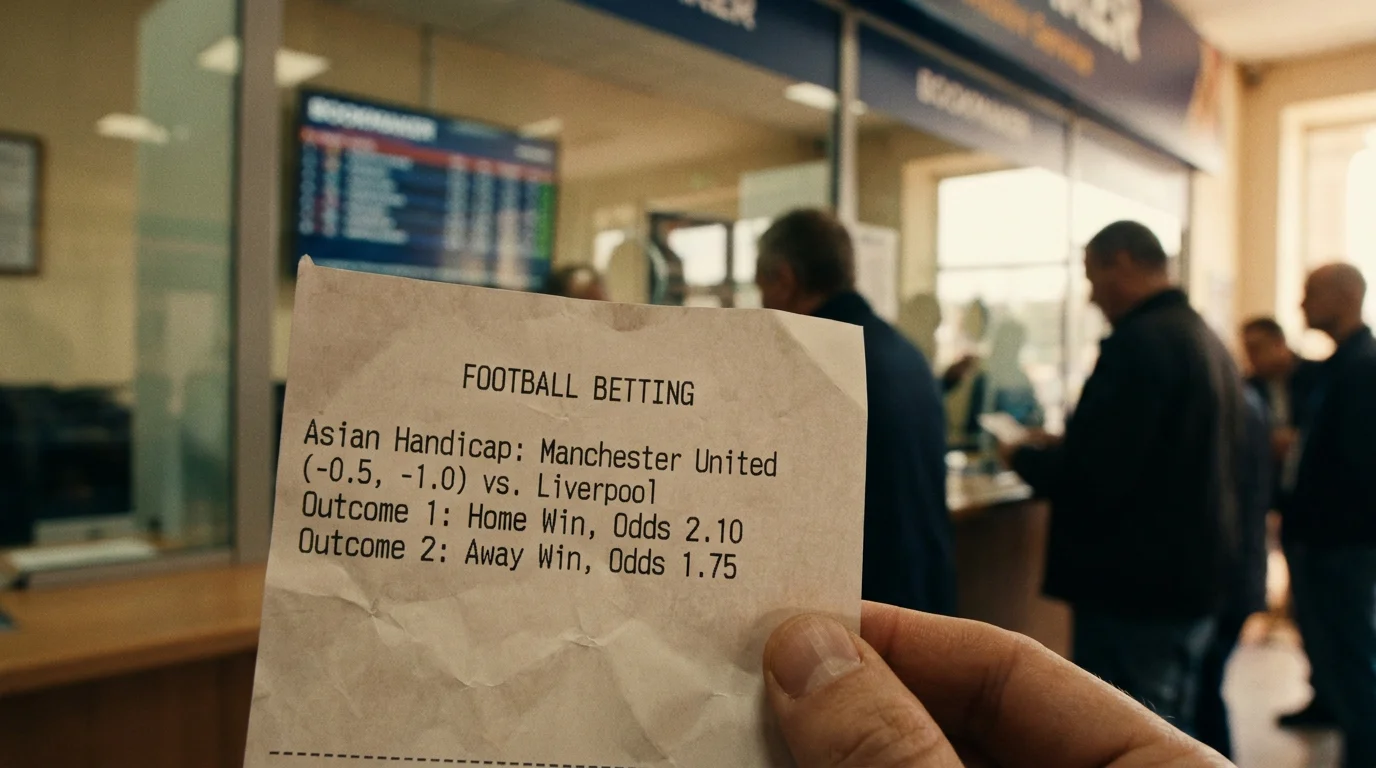
Full, Half and Quarter Lines: What Happens When You Win, Lose or Void
The mechanics of Asian handicaps confuse people at first, but they are logical once you see the pattern. Let me walk through each type with a concrete example.
A half-goal line is the simplest. If you back Arsenal -0.5 at 1.90, Arsenal must win by at least one goal for your bet to pay. If they draw or lose, you lose. There is no void, no push, no ambiguity. The -0.5 line is functionally identical to backing Arsenal to win, but as a two-outcome market, the odds are typically better than the three-way price because the draw probability has been redistributed.
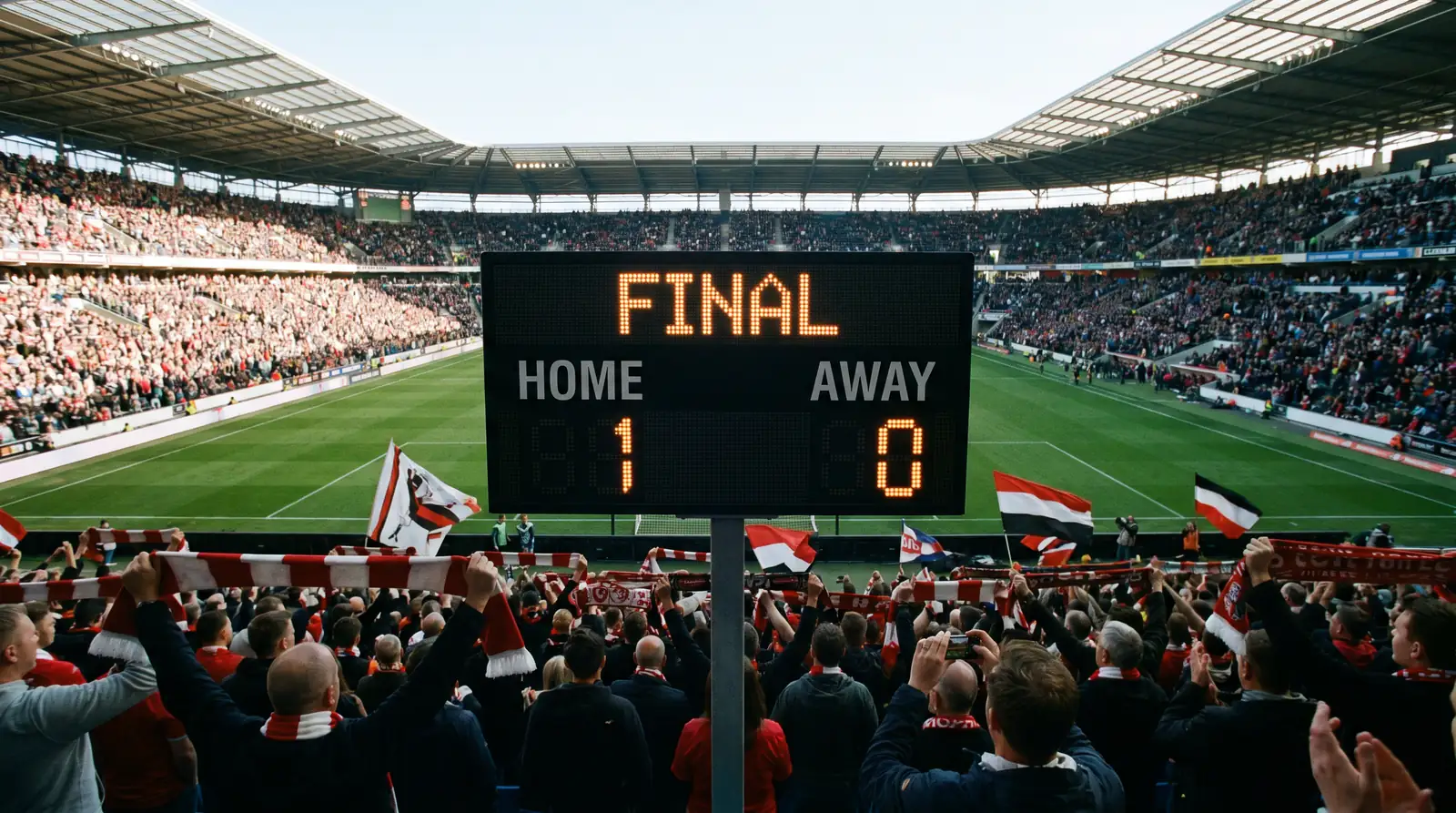
A full-goal line introduces the possibility of a void. Back Arsenal -1.0 and they need to win by two or more goals for a full payout. If they win by exactly one, your stake is returned — the bet is voided. If they draw or lose, you lose. This halfway house feels uncomfortable to some punters, but it is actually a useful hedge: you get a better price than -1.5 with the safety net of a refund on the most likely losing scenario.
Quarter-goal lines are where Asian handicaps become genuinely elegant. A line of -0.75 splits your stake equally between -0.5 and -1.0. If Arsenal win by two or more, both halves win. If they win by exactly one, the -0.5 half wins and the -1.0 half is voided — you get a half-win. If they draw or lose, both halves lose. This granularity lets you fine-tune your position in a way the three-way market simply cannot match.

The margin on Asian handicap markets typically sits at the lower end of the 4-7% range that bookmakers charge across football. On high-profile Premier League fixtures, I have seen overrounds as low as 2.5-3% on the main handicap line, which is about as good as it gets outside a betting exchange. That tight margin is itself a reason to prefer handicaps — every fraction of a percent you save on margin compounds over hundreds of bets.
One detail that catches newcomers: the handicap line moves in response to money and information just like any other market. If the line on a fixture opens at -0.75 and drifts to -1.0, that tells you the market expects a more dominant performance from the favourite. Reading line movement is an analytical skill in its own right, and it provides useful information even if you ultimately bet a different market.
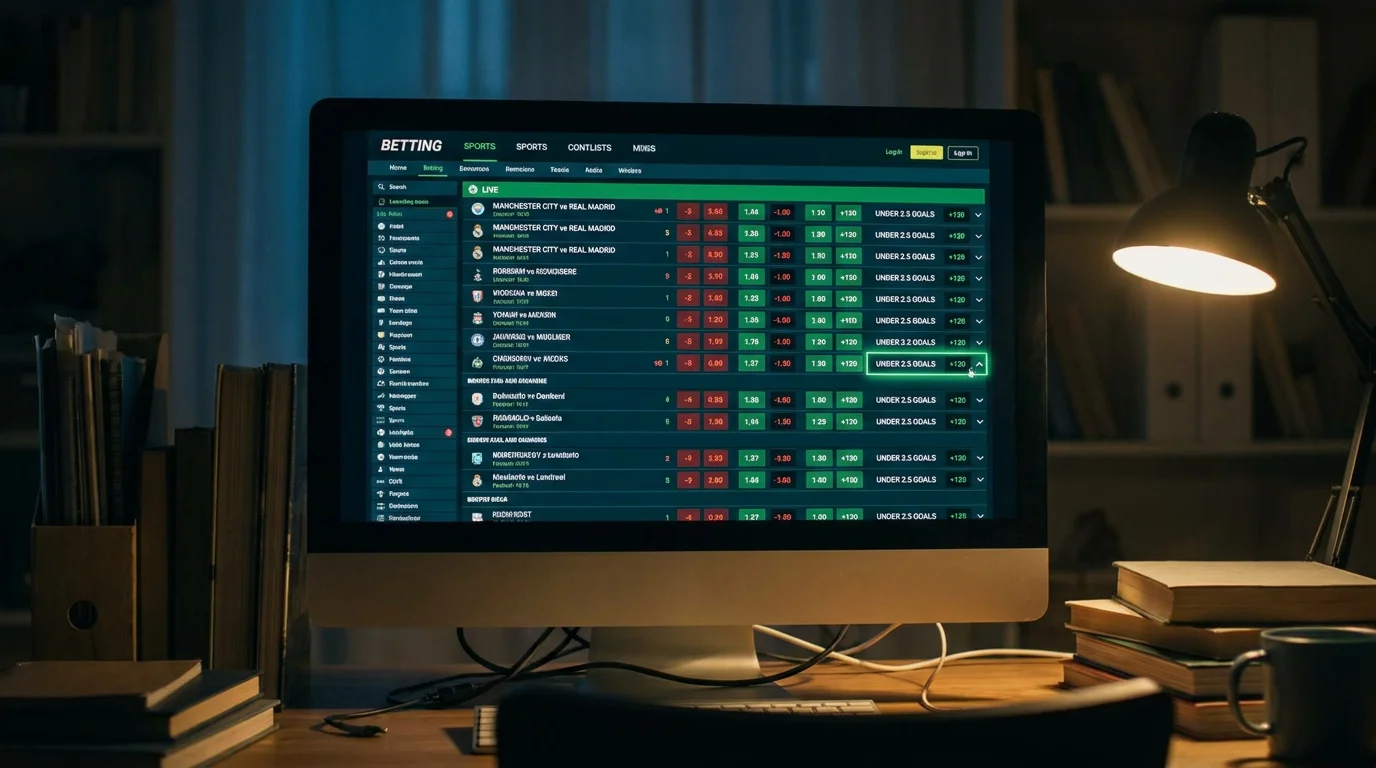
Choosing Asian Handicap Over Match Result
So when should you reach for the Asian handicap instead of the standard three-way market? My rule of thumb has three parts.
First, when you have a strong directional opinion but the three-way price does not compensate for the draw risk. If you are convinced a side will win but the match result odds are 1.80, check the -0.5 Asian line. It will often be 1.85-1.95, because the bookmaker’s margin is spread across two outcomes instead of three. You are backing the same result at a better price.
Second, when the fixture profile suggests a tight game with a likely winner. Derbies and relegation clashes often produce narrow victories. A -0.5 handicap lets you back the winner without needing a two-goal margin, while the full-goal or quarter-goal lines give you calibrated exposure to different margin-of-victory scenarios.

Third, when you want partial insurance. The quarter-goal lines (-0.25, -0.75, -1.25) offer a built-in hedging mechanism that no other market replicates. A -0.25 bet on a team means you only lose half your stake if the match draws and win in full if your team wins. That is a genuinely different risk profile from the three-way market, and it suits fixtures where the draw is a real possibility but you still lean toward one side.

The one scenario where I stick with the three-way market is when the draw itself is my bet. Some fixtures — tactical cup ties, dead-rubber group stage games, matches between evenly-matched defensive sides — scream draw, and the three-way market is the only place to back it. Asian handicaps, by design, eliminate the draw as an outcome, so they are the wrong tool for that job.
If the mechanics of how bookmakers price these lines interest you, understanding how football betting odds work in general will make the handicap market much easier to navigate.
What happens to my bet if the Asian handicap line is exactly the final margin?
If you are on a full-goal line and the margin matches exactly — for example, you backed -1.0 and the team wins 2-1 — your stake is returned in full. This is called a push or void. On half-goal lines this scenario cannot arise, which is why many bettors prefer them: every bet produces a definitive win or loss with no ambiguity.
Is Asian handicap available on lower-league matches?
Most major UK bookmakers offer Asian handicaps on Premier League and Championship fixtures as standard. Coverage thins out in League One and League Two, where you may only find half-goal lines on the main handicap rather than the full range of quarter-goal options. For lower-league Asian handicap markets with better liquidity, betting exchanges sometimes offer sharper lines than traditional bookmakers.
