

 Available in US
Content
Your Brain Is Working Against Your Bankroll
I kept meticulous records for my first full season of football betting. When I reviewed them in May, the data showed something I had not expected: my best bets — the ones with the strongest analytical reasoning — were consistently undermined by the ones I placed on impulse. The impulse bets were smaller individually, but there were so many of them that they dragged my entire season into the red. That was when I started studying why I was making those decisions, and the answer had nothing to do with football knowledge.
Thirteen percent of adult grassroots footballers in England meet the criteria for problem gambling, according to research from the University of Bristol. Seventy percent of the broader sample were classified as at-risk. Those numbers are not driven by stupidity or lack of information — they are driven by cognitive biases that affect everyone, including experienced bettors who think they are immune. The biases are built into the way human brains process risk, reward, and uncertainty, and the betting environment is perfectly designed to exploit them.

Confirmation Bias, Loss Chasing, Gambler’s Fallacy and Four More
Confirmation bias is the tendency to seek out information that supports what you already believe and ignore information that contradicts it. In betting, this looks like checking three stats sites until you find one that backs your selection, while skipping over the two that suggested the opposite. I catch myself doing this regularly, and the only reliable defence is to actively seek the case against every bet before placing it. If you cannot articulate a strong reason why your selection might lose, you have not done enough research.
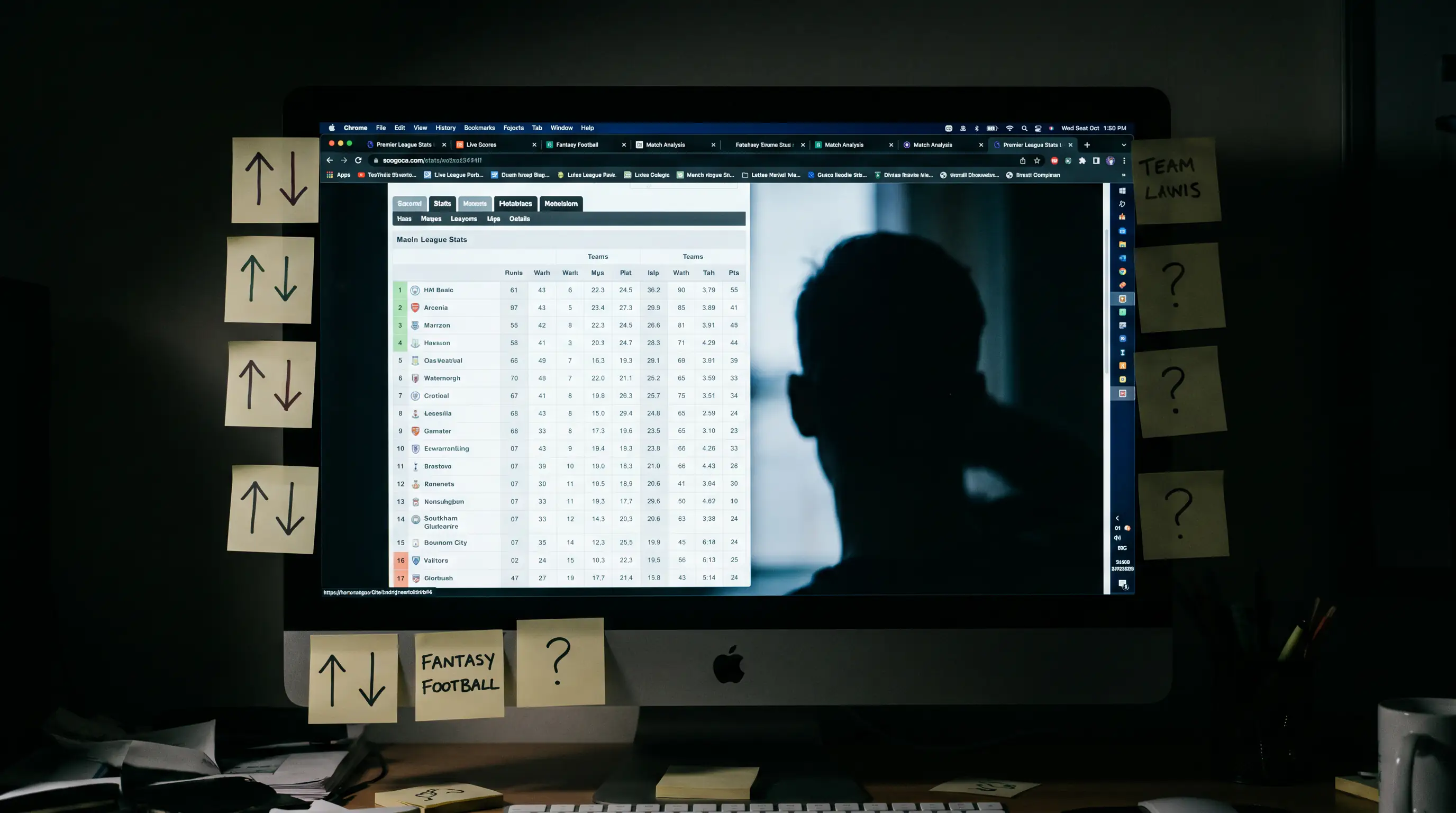
Loss chasing is the most destructive behaviour in football betting. You lose a bet, feel the sting, and immediately look for another opportunity to win the money back. The follow-up bet is almost always less well-researched than the original, placed at worse odds, and at a higher stake. The Bristol study found that 22% of participants aged 11-15 reported gambling in the past month — loss chasing is not a sophisticated adult problem; it is an instinctive response to loss that starts early and persists throughout life unless consciously managed.
The gambler’s fallacy is the belief that past outcomes influence future independent events. “The home side has drawn their last three matches, so they are due a win.” Football matches are not coin flips — form and momentum are real factors — but the fallacy manifests when you treat a sequence of results as though it mechanically increases the probability of the next outcome. Three consecutive draws tell you something about the team’s profile, not about mathematical inevitability.
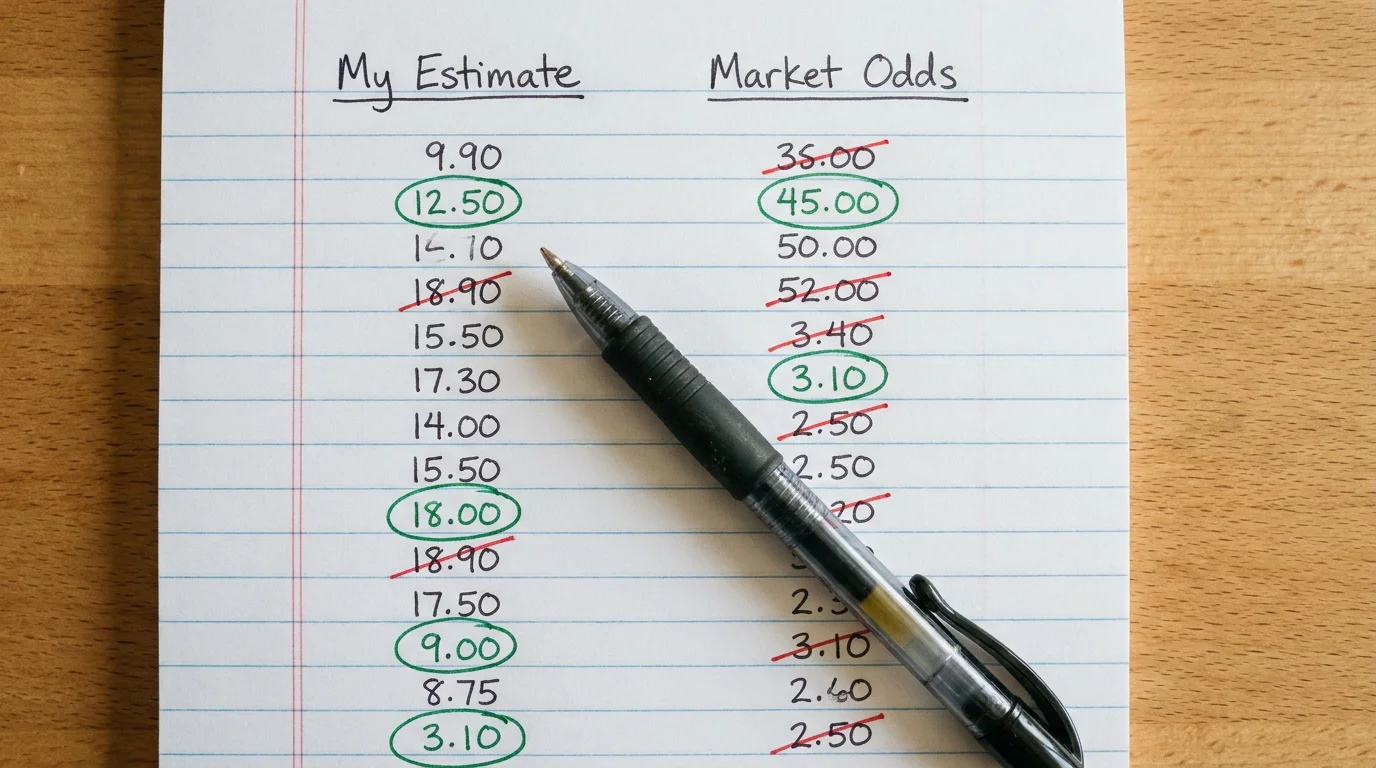
Anchoring bias happens when the first piece of information you encounter disproportionately shapes your judgement. If you see a team priced at 2.50 on Monday and the price drifts to 2.80 by Saturday, the anchor of 2.50 makes 2.80 feel like extraordinary value — even if 2.80 is the fair price and 2.50 was an early-week error. I combat anchoring by never looking at opening odds until I have formed my own probability estimate for a match. My number comes first; the market’s number comes second.
Recency bias overweights the most recent information at the expense of the broader picture. A team loses 4-0 on Saturday and suddenly looks unbettable, even though their season-long xG profile remains strong and the 4-0 was an outlier driven by an early red card. The antidote is to always check the rolling average alongside the most recent result. One match is a data point; six matches is a trend.
Overconfidence bias is the belief that your analysis is more accurate than it actually is. After a winning streak, it feels like you have cracked the code. You increase stakes, broaden your coverage to unfamiliar leagues, and start placing bets based on thin analysis because you trust your instincts. Then the market corrects you. I set a hard rule: no stake increases for at least 30 days after a winning month, because the temptation to ride the wave is strongest exactly when the risk of regression is highest.

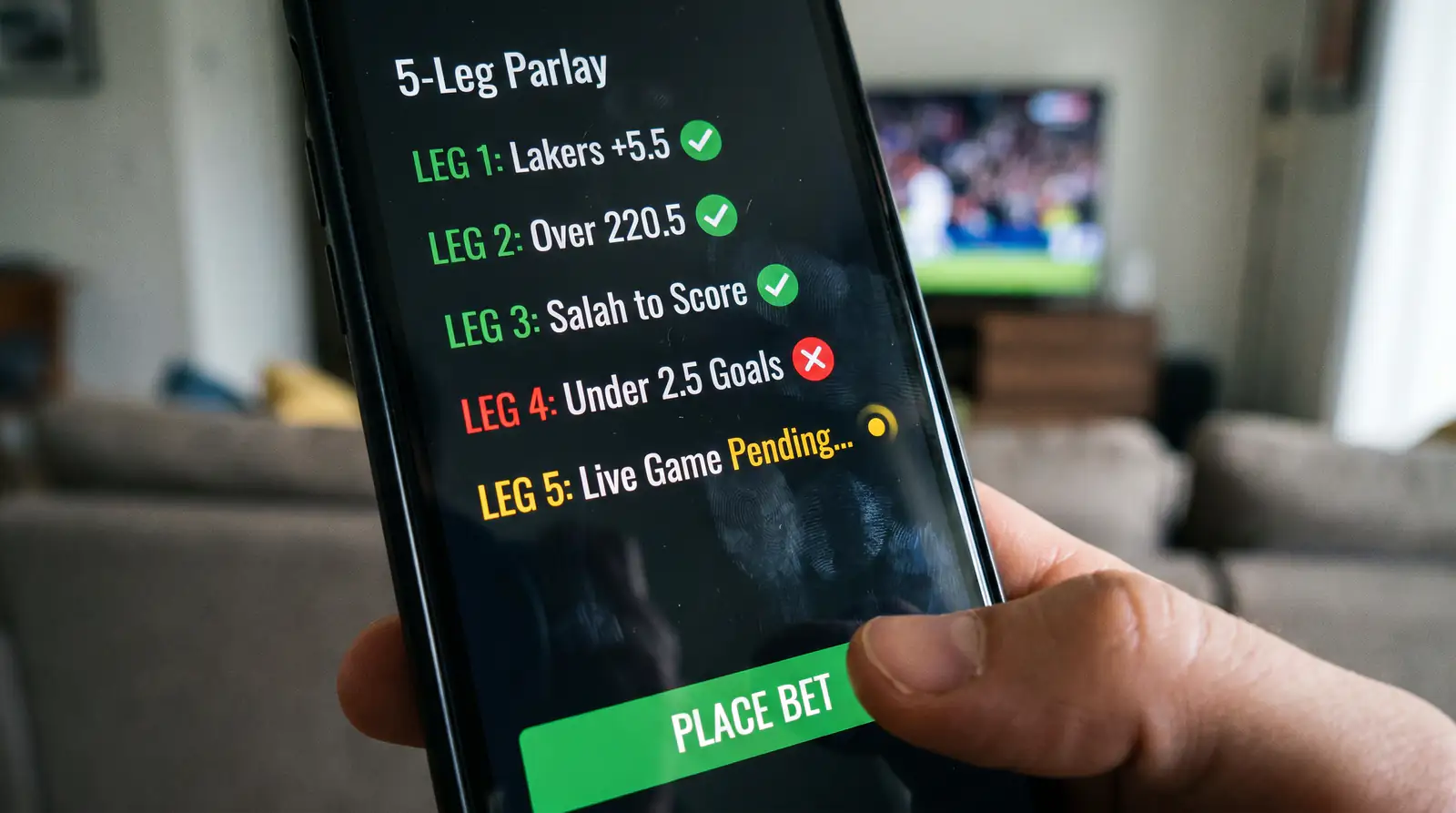
Sunk cost bias keeps you in a losing bet builder because you have already invested in the first three legs. The cash-out offer looks terrible, but letting the bet ride feels worse because you have “invested” in the outcome. In reality, the money is gone the moment you placed the bet. The only rational question is whether the cash-out value exceeds your current estimate of the remaining probability. Emotional attachment to sunk stakes is one of the bookmaker’s most reliable profit sources.
Rules and Routines That Short-Circuit Each Bias
Knowing the biases is not enough. You need systems that prevent them from influencing your decisions in real time.
For confirmation bias: write down the case against your bet before placing it. If the counterargument is stronger than the argument for, walk away. This takes sixty seconds and has saved me more money than any analytical model.
For loss chasing: set a daily loss limit and enforce it. When you hit the limit, close the app. No exceptions. The loss limit should be separate from your deposit limit — it is a behavioural trigger, not a financial one.
For the gambler’s fallacy: stop looking at result sequences in isolation. Replace “they are due a win” with “what does the rolling xG say about their expected win rate?”
For anchoring: form your own probability estimate before checking the odds. Write it down. Only then compare it to the market. If the gap is narrow, move on.
For recency bias: always consult the six-match rolling average before reacting to a single result. One data point does not override a trend.
For overconfidence: maintain a fixed staking plan regardless of recent results. Winning streaks end. The plan survives them.
For sunk cost: evaluate every cash-out decision purely on the remaining probability versus the offered price. Ignore what you have already staked.
These are not personality traits to overcome. They are design features of the human brain operating in an environment built to exploit them. The bettors who succeed long-term are not the ones without biases — they are the ones who have built routines that limit how much damage those biases can do. For a structured approach to managing your funds alongside these psychological defences, the football betting strategy guide covers staking systems and record-keeping in detail.

How do I stop chasing losses after a bad weekend?
Set a daily or weekend loss limit before you start betting and enforce it absolutely. When you hit the limit, close the app — do not check results, do not browse markets, do not look for one more bet. The urge to chase fades within an hour in most cases. If it does not, use the 24-hour time-out feature available on every UK-licensed betting site.
Is taking a break from betting an effective reset?
Yes, provided it is a genuine break rather than a pause before diving back in. A week away from all betting activity gives your brain time to detach from the emotional cycle of wins and losses. When you return, review your records from the previous month before placing a single bet. If the numbers show a losing pattern driven by impulse bets rather than analytical selections, adjust your process before restarting.
