

 Available in US
Content
Everyone Claims 80% Hit Rate – Almost Nobody Proves It
Three years ago a friend forwarded me a Twitter account claiming a 78% strike rate on weekend football tips. The account had 30,000 followers, a highlights reel of winning bet slips, and a Telegram VIP group costing £50 per month. I spent an afternoon reconstructing their publicly posted tips over the previous six months. The actual strike rate was 41%. The “78%” came from a cherry-picked three-week window during a run of favourites that anybody could have backed. The missing months – the ones with six and seven consecutive losers – had been quietly deleted.

“Football betting” generates 19,000 monthly searches in the UK, more than any other sport. That search volume fuels a cottage industry of tipsters competing for attention, and the competition rewards self-promotion over honesty. Football betting generates £1.1 billion in GGY annually, and a portion of that flows through people who follow tipsters without ever verifying the claims those tipsters make.
Red Flags: Cherry-Picked Stats, Missing Months and Selective Markets
I have audited dozens of tipster accounts over the years, and the same patterns of deception appear repeatedly. Knowing what to look for saves you both money and time.
The first red flag is a strike rate quoted without a time frame or sample size. “78% winners” means nothing without context. Seventy-eight percent of how many bets? Over what period? On which markets? A tipster backing heavy favourites at 1.20 can hit 80% and still lose money because the winners do not cover the losers. Strike rate without yield or ROI is a meaningless vanity metric.

The second red flag is missing data. Any tipster who deletes losing tips, skips reporting on losing weeks, or suddenly goes quiet for a month before resurfacing with a “hot streak” is manipulating their record. A genuine track record includes every bet – the ugly ones as much as the pretty ones. If the record only shows winning months, the losing months exist; they have just been hidden.
The third red flag is odds quoted after the fact. A tipster who posts “I told you to back X at 3.50” without a timestamped pre-match post at those odds is retroactively inflating their record. Odds move, and the price available when the tip was supposedly given may have been very different from the price quoted in the post-match celebration. Independent proofing services exist for exactly this reason – they timestamp tips at the moment of posting and record the odds at that instant.

The fourth red flag is selective market reporting. Some tipsters only report their match result picks while quietly ignoring their goalscorer and correct score bets, which may be deep in the red. A genuine record covers all markets the tipster operates in, not just the ones that happen to be profitable this month.
The fifth red flag is pressure to join a paid service immediately. Scam tipsters rely on urgency – “limited spots in VIP,” “price going up tomorrow,” “last chance to join” – because they need your money before you have time to verify their claims. A tipster with a genuine edge has no reason to rush you. Their results speak for themselves over time.

What a Genuine Track Record Looks Like: ROI, Sample Size, Yield
A legitimate football tipster record has three characteristics that are difficult to fake.
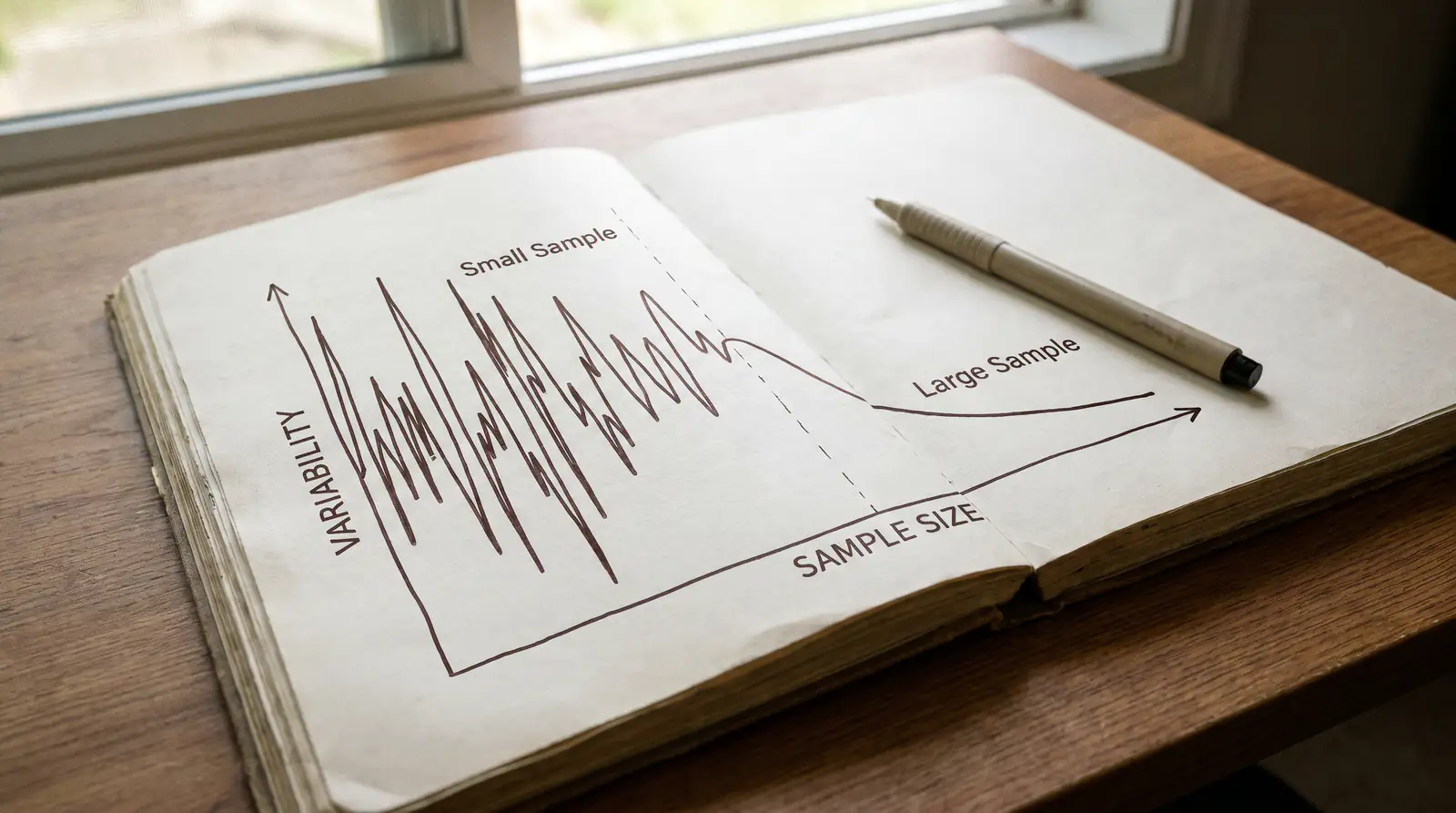
First, a minimum sample size of 500 bets. Below 500, variance dominates and it is impossible to distinguish genuine skill from luck. A tipster claiming profitability over 50 or 100 bets has not proved anything – the confidence interval around their ROI is so wide that their true edge could easily be zero or negative. I would not pay for any tipster service without at least 500 tracked bets, and ideally 1,000 or more.
Second, yield reported alongside strike rate. Yield is the profit per unit staked, expressed as a percentage. A strike rate of 55% with an average odds of 1.80 produces a yield of roughly minus 1% – you are actually losing money despite winning more than half your bets. Yield captures the interaction between strike rate and odds that strike rate alone misses. A genuine profitable tipster has a positive yield over a large sample, typically in the range of 2-8% for football markets. Anyone claiming a yield above 15% over 500+ bets is either extraordinary or fabricating.
Third, transparency about drawdowns. Every profitable tipster goes through losing periods. A track record that shows smooth, uninterrupted profit is either fake or so conservative that the returns do not justify the subscription fee. A genuine record includes the worst drawdown – the peak-to-trough decline – so you can judge whether the losing periods are within a range you can tolerate as a follower.
Independent proofing services provide the gold standard of verification. These platforms record every tip at the moment it is posted, log the odds available at that time, and calculate cumulative results automatically. If a tipster is not verified by an independent proofing service, ask why. The answer “I don’t need to prove myself” is not reassuring – it is the answer every fraudulent tipster gives.
The honest truth is that most football tipsters, including many well-known ones with large followings, are not profitable over a meaningful sample when their records are properly audited. That does not mean no tipster has ever provided value – some do, and a few are genuinely skilled analysts. But finding them requires the same analytical rigour you would apply to your own betting: verify the data, demand transparency, and never pay for confidence without evidence. For a broader look at what realistic profitability looks like in football betting, the profitability analysis sets honest expectations.

How many bets make a statistically meaningful track record?
A minimum of 500 bets is needed to draw preliminary conclusions about a tipster’s edge. At 500 bets, the confidence interval around the observed ROI is still wide, but you can start to distinguish a plausibly profitable approach from random variance. For stronger statistical confidence, 1,000 bets or more is preferable. Anything below 200 bets tells you almost nothing – even a losing tipster can show a profit over that sample through pure luck.
Should I pay for football tipster services?
Only if the tipster’s record meets the three criteria above: 500+ bet sample, positive yield verified over at least a full season, and independently proofed results. Even then, calculate whether the subscription cost is justified by the expected profit. A tipster charging £50 per month with a 5% yield on recommended £10 stakes needs to provide roughly 100 tips per month for you to break even on the fee alone. Most paid tipsters do not provide enough volume at enough edge to justify the cost.
